
There is a special kind of board-game misery: you have a plan, your opponent looks relaxed, and you suddenly suspect the harmless piece in front of you is trouble. Stratego runs on that feeling. An AI called Ataraxos has become remarkably good at handling it.
MIT’s September 30, 2026 report accompanies a new Nature publication from researchers at MIT, Carnegie Mellon, NYU and Stanford. The attention-grabber is a convincing win over a decorated human champion. The interesting part is how the system makes decisions when crucial information stays hidden.
The board is visible. The danger is not.
In chess, both players can see which piece is which. In Stratego, the opponent’s piece identities start concealed. Capturing the enemy flag wins, but approaching it means making choices before you know exactly what you are facing. A promising attack can become an expensive lesson.
That makes the game a useful reminder for anyone who loves a tidy strategy: a plan can be logically sound and still rest on the wrong assumption. Knowing where a piece stands is different from knowing what it can do.
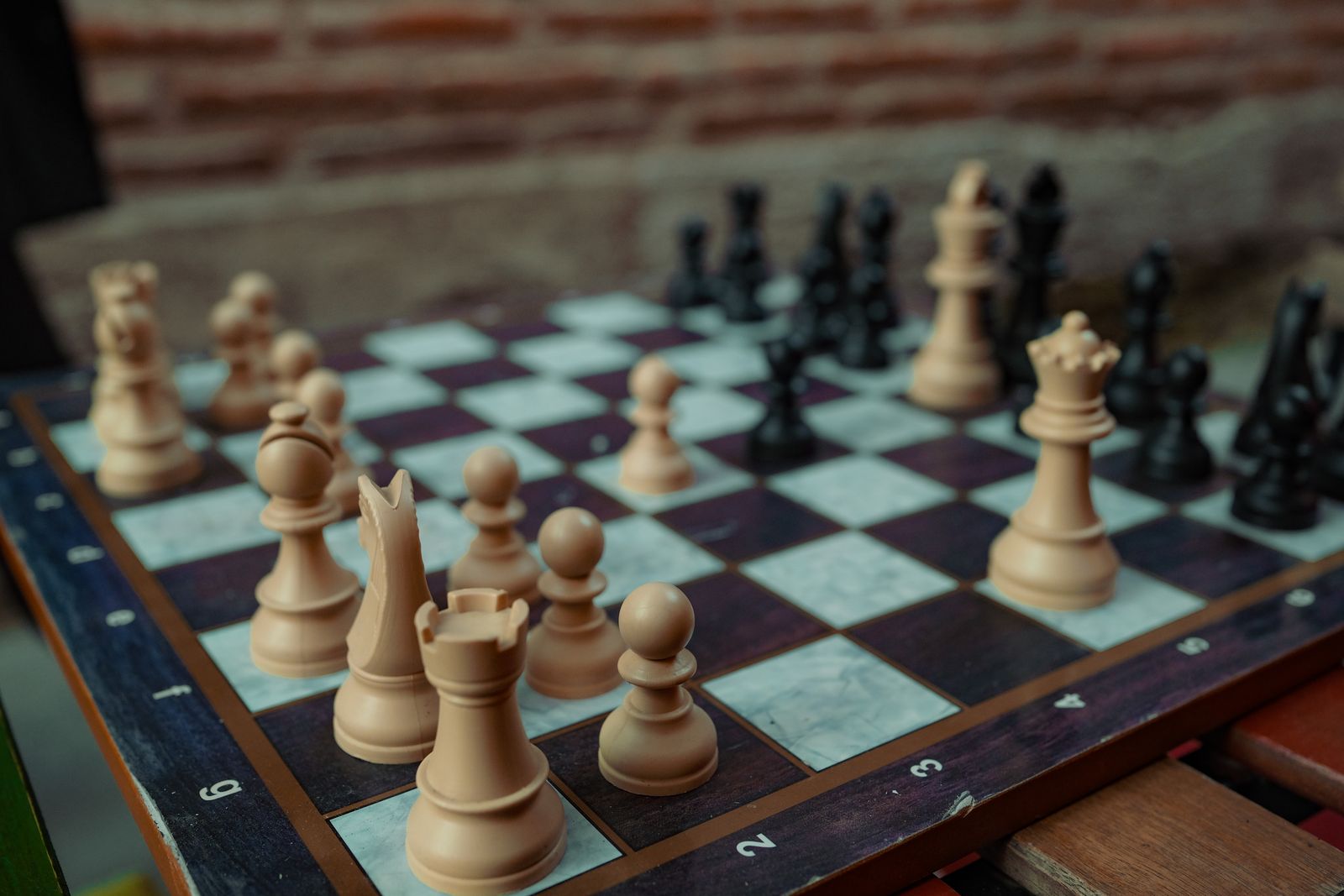
The score worth remembering
The authors’ original preprint reports a 20-game series against Pim Niemeijer: 15 wins, four draws and one loss for Ataraxos. Those games took place in July 2025. The preprint appeared in November 2025, so the new journal publication should not be mistaken for a match played this week.
Practice first. Think again before moving.
Ataraxos learns through self-play, then spends additional computation refining a decision during a game. Its belief model samples plausible identities for hidden pieces; search evaluates moves across those possible situations. It reasons from uncertainty rather than being handed the opponent’s secrets.
Think of it as preparing for several versions of the same bad afternoon. You do not need certainty about every threat to choose a move that holds up reasonably well across the possibilities. That is our analogy, not a claim that the system thinks like a person.
Why this is more than a board-game flex
MIT reports better playing strength and substantially more efficient training than earlier methods. The researchers see potential in other situations with hidden information, including negotiation and cybersecurity. They also say decisions need to become explainable and auditable before adoption.
Our takeaway: a win inside a game is evidence about that game, not a guarantee of success in a messy real-world setting. A board has defined rules and measurable outcomes. Outside it, even deciding what counts as a good result can be an argument.
Still, there is something satisfying about a research story built around a familiar tabletop problem. The next time you dust off an old board game, pay attention to what you assume about the opponent. The quiet piece might be the whole story.
Sources
MIT News, September 30, 2026: publication announcement, research overview and proposed applications.
Author preprint, November 10, 2025: methods, game rules and the dated Niemeijer evaluation.
Image credits
Featured Image: computer circuit board by Jakub Pabis / Pexels. Illustrative photograph, not the Ataraxos training hardware. Inline chess photo: Tuğçe Açıkyürek / Pexels. Both photographs are used under the Pexels License, checked October 1, 2026.

