Cool News · Life at the Limit
There is now an amoeba with a name that sounds like a forgotten heavy metal band and a preferred temperature that would ruin your afternoon. Incendiamoeba cascadensis, better known as the fire amoeba, can reproduce at 145°F.
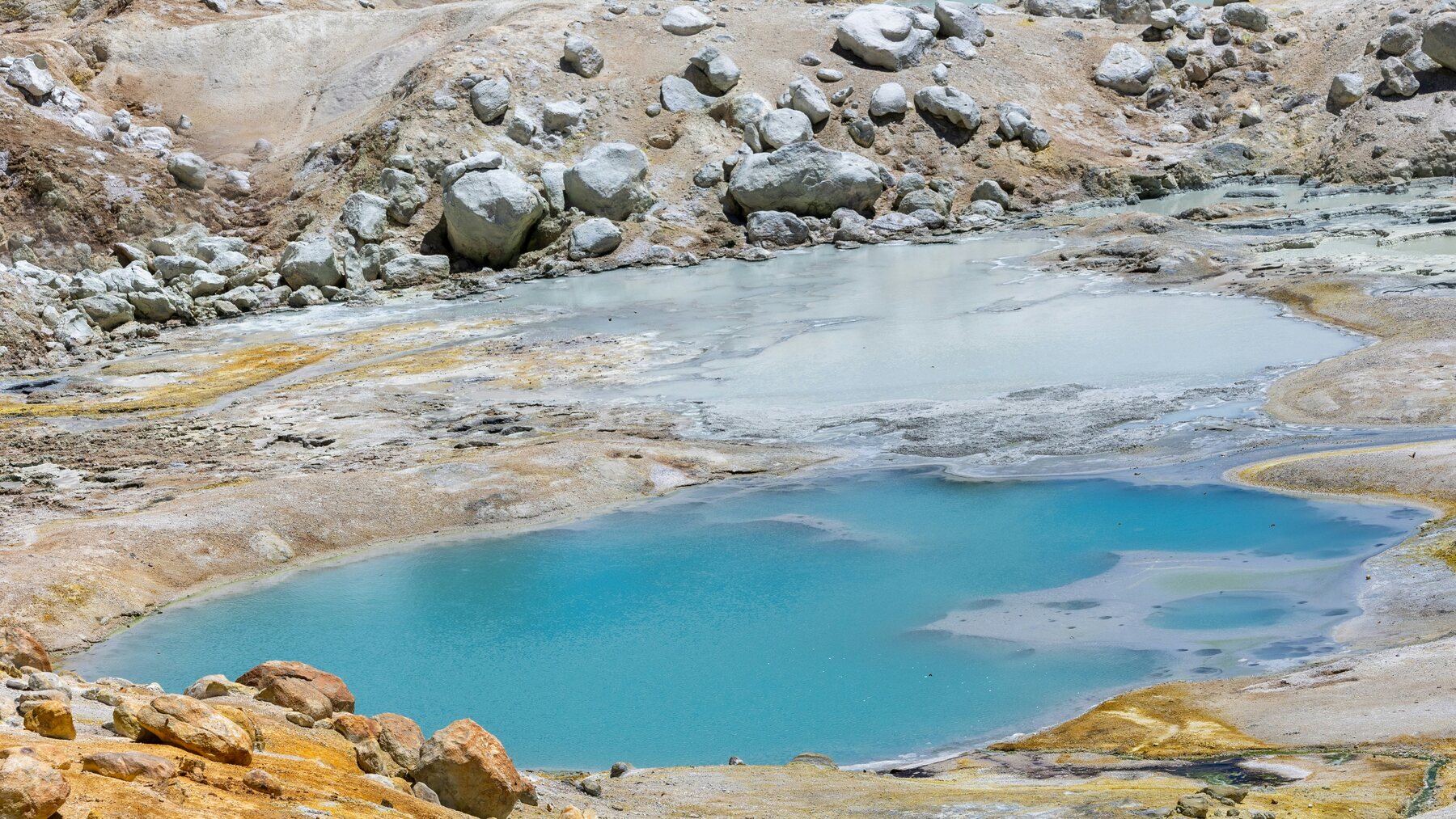
Researchers recovered the newly described species from a plain-looking tributary in California’s Lassen Volcanic National Park. In the laboratory, it ate, moved, and divided at temperatures that scientists had considered beyond the working limit for eukaryotic cells.
That last detail matters. The fire amoeba is not a bacterium or an archaeon. It is a eukaryote, meaning its single cell contains a nucleus and other membrane-bound machinery. Animals, plants, fungi, and people are all eukaryotes too. This tiny shape-shifter just operates much closer to the boiling end of the thermostat.
The field card
- Name: Incendiamoeba cascadensis
- Nickname: Fire amoeba
- Found: Lassen Volcanic National Park, California
- Growth record: 145°F (63°C)
- Still moving: 147°F (64°C)
- Emergency mode: Forms dormant cysts at 158°F (70°C)
The record is not just about surviving
Lots of organisms can endure a miserable few minutes. The impressive part is doing ordinary life while the heat is trying to dismantle your cells.
The researchers gradually raised the temperature in the lab. The amoebae kept growing from 135°F to 140°F, then continued dividing at 145°F. At 147°F they stopped reproducing but remained active. NASA’s research summary says the cells were partially active at 150.8°F and recovered after five minutes at 158°F. At that point they protected themselves by forming cysts, a dormant state that can reactivate when conditions cool. Exposure to 176°F was too much for recovery.
The previous upper limit for known eukaryotes was 140°F, held by a few fungi and red algae. Bacteria and archaea can tolerate much hotter environments, so this is not a record for all life. It is a new high-water mark for organisms built with the same broad type of cellular architecture we have.
Why heat is brutal on a complex cell
Heat makes proteins lose their useful shapes. It can damage DNA and pull cell membranes apart. A eukaryotic cell has additional internal membranes surrounding structures such as its nucleus and mitochondria, which gives the heat more delicate machinery to attack.
The fire amoeba appears to carry a serious repair kit. The team sequenced its genome and found genes involved in stabilizing DNA, sensing the surrounding environment, and maintaining proper protein folding. Some of its proteins also have unusually positive surface charges, a feature that may help them stay stable in heat and resembles adaptations seen in heat-loving bacteria and archaea.
Those findings are mechanisms the researchers observed, not a finished instruction manual. Scientists still need to determine how the adaptations work together and whether related amoebae use the same tricks.
The coolest part is where they found it
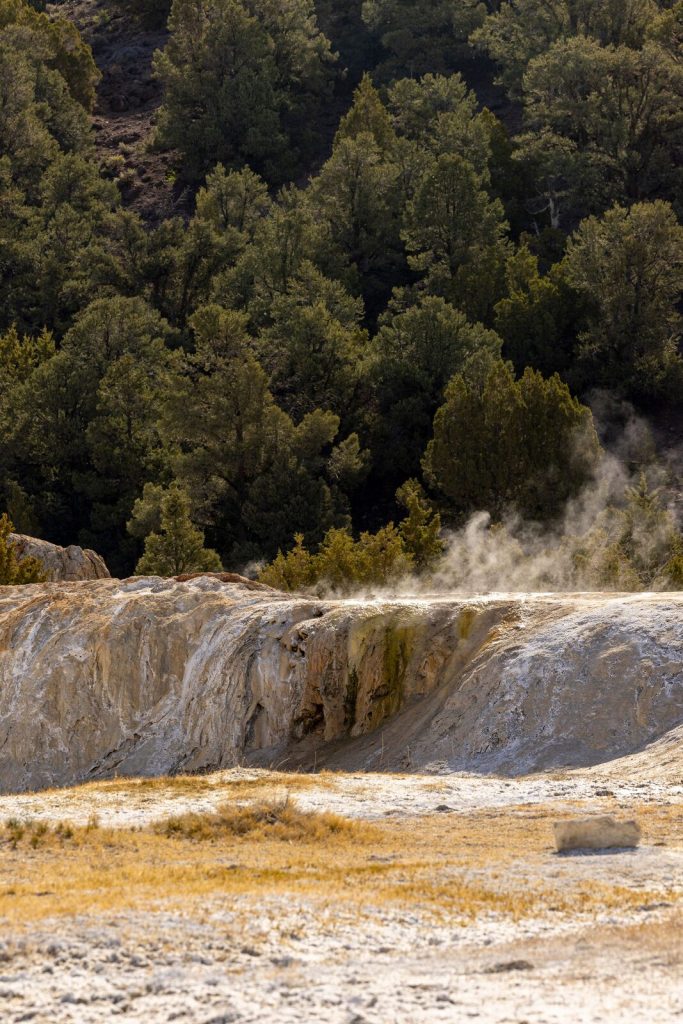
Lassen is packed with roaring fumaroles, boiling pools, mud pots, and steaming ground. The National Park Service explains that rain and snow seep underground, meet rock heated beneath Lassen Peak, and return as the park’s hydrothermal features.
You might expect a record-breaking organism to come from the most theatrical, sulfurous pool in the park. It did not. Portland State University reports that the team recovered it from an unremarkable tributary they had regularly walked past on the way to better-known sampling sites.
That humble location makes the story better. The scientists later searched existing genetic datasets and found related DNA signatures in geothermal samples from Yellowstone and New Zealand. The fire amoeba may be a record holder, but it might not be lonely.
Why NASA cares about a puddle-dwelling amoeba
Astrobiology is partly an exercise in learning which assumptions deserve to be broken. If complex cells can function above a temperature once considered a hard limit, scientists can widen the range of environments worth investigating on Earth and beyond.
That does not mean the amoeba could simply be dropped onto Mars. Temperature is only one requirement. It also needs suitable water, oxygen, acidity, pressure, food, and a supporting ecosystem. Earth remains the only world known to provide the entire package.
Still, the discovery changes one number in the handbook of what complex life can do. Science often advances exactly like this: somebody stops beside the boring-looking stream everyone else walks past.
Sources
- Cell: A geothermal amoeba sets a new upper temperature limit for eukaryotes
- NASA Science: Complex life defying record heat
- Portland State University: Discovery at Lassen Volcanic National Park
- National Park Service: Lassen hydrothermal areas
Image credits
- Featured Image: Lassen geothermal pool by Royce Fonseca, sourced from Unsplash under the Unsplash License.
- Microscope photo by Jorge Chan, sourced from Pexels.
- Geothermal steam photo by Stephen Leonardi, sourced from Pexels. Pexels photographs are covered by the Pexels License.

